
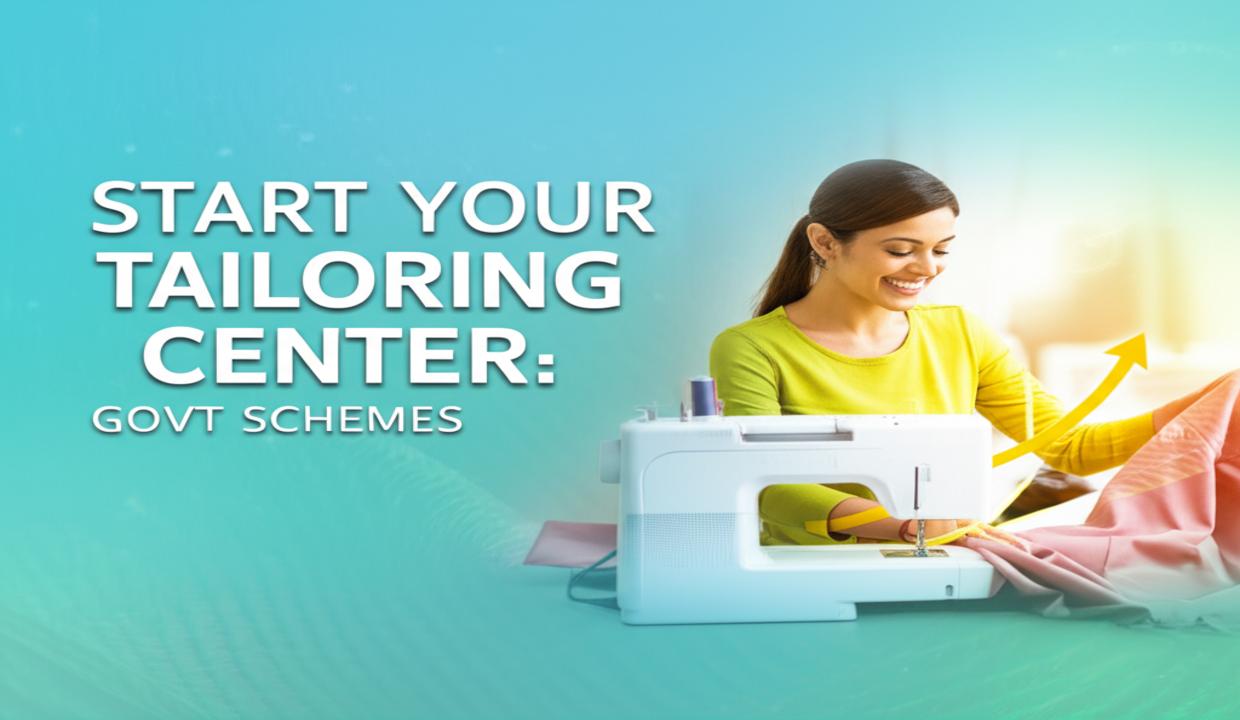
Embarking on an entrepreneurial journey can be both exciting and challenging. If you’re considering the lucrative field of fashion and textiles, learning how to start a tailoring center with a government scheme in India offers a fantastic pathway. This guide will walk you through the essential steps, highlight key government initiatives, and provide practical advice to help your tailoring business flourish.
India’s rich textile heritage combined with a booming fashion industry creates immense opportunities. A tailoring center government scheme not only provides financial assistance but also crucial training and accreditation, empowering individuals to achieve self-reliance. This approach aligns perfectly with national goals of skill development and women’s empowerment. Let’s explore how you can unlock this success.
Main Highlights: Start a Tailoring Center with a Government Scheme
Starting your own tailoring center is now more accessible than ever, thanks to various government initiatives. These programs aim to provide the necessary resources, training, and support to budding entrepreneurs, especially those from economically disadvantaged backgrounds. The core idea is to transform aspiring tailors into skilled professionals and successful business owners.
Key highlights include skill development programs like the Samarth Scheme, which focuses on textile sector capacity building. Additionally, several state-level schemes offer advanced sewing machines and training, often at highly subsidized rates. The emphasis is on practical training, official accreditation, and crucial placement or entrepreneurship support.
Understanding Government Schemes for Tailoring Businesses
The Indian government has recognized the immense potential of the textile and apparel sector in creating employment and fostering economic growth. Several schemes have been rolled out to support individuals and groups looking to start a tailoring business. These initiatives cover everything from skill enhancement to providing essential equipment.
The Samarth Scheme: Boosting Textile Skills
A flagship program in this regard is the Samarth Scheme, officially known as the Scheme for Capacity Building in the Textile Sector. This central government initiative is designed to train 10 lakh persons in various textile skills, including specialized tailoring, over a three-year period. With a substantial budget of ₹1300 crore, it’s a testament to the government’s commitment to skill development.
The Samarth Scheme focuses on demand-driven, employment-oriented training. It encourages industry participation, ensuring that the skills imparted are relevant to the market needs. If you’re looking to establish a training center, partnering with the Samarth Scheme can provide accreditation and a structured curriculum. More details are available on the Samarth Scheme official portal.
State-Level Initiatives: Tailored Support for Local Needs
Beyond central government schemes, many states offer their own unique programs to promote skill development and self-employment in tailoring. These schemes often cater to specific demographics, such as women or tribal communities, ensuring equitable access to opportunities.
A notable example is the Sathiyavanimuthu Annaiyar Ninaivu Free Supply of Sewing Machine Scheme in Tamil Nadu. This initiative specifically aims to empower women from weaker sections by providing advanced sewing machines at significantly subsidized rates – often as high as a 90% subsidy. Such schemes drastically reduce the initial capital investment required for beneficiaries.
Furthermore, these state-level programs often establish and run their own tailoring training centers. They particularly focus on uplifting tribal women, equipping them with valuable skills for sustainable livelihoods. For more information on this particular scheme, you can visit the Tamil Nadu Government Welfare Scheme page.
Step-by-Step Guide: How to Start Your Tailoring Center with Government Support
Establishing a successful tailoring center, especially one integrated with a government scheme, requires a strategic approach. Here’s a detailed guide to help you navigate the process.
1. Conduct a Needs Assessment and Identify Target Beneficiaries
Before setting up your center, it’s crucial to understand the demand in your locality. Identify your target audience: Are you focusing on women seeking self-employment, youth needing vocational skills, or economically disadvantaged individuals? A thorough needs assessment will help you design a program that truly serves your community.
Consider the demographics, local industry needs (e.g., demand for garment workers), and the specific challenges faced by potential beneficiaries. This initial research forms the bedrock of your center’s success. It ensures your silai center yojana aligns with genuine community needs.
2. Set Up a Modern Facility and Procure Equipment
Your tailoring center needs to be well-equipped to provide effective training. This means investing in or acquiring modern sewing machines, a range of cutting tools, and even basic pattern-making software. The quality of your equipment directly impacts the learning experience and the skill level of your trainees.
Many government schemes for small business, particularly those focused on skill development, offer provisions or subsidies for procuring such equipment. Explore these options to minimize your initial outlay. A well-lit, spacious, and organized facility enhances productivity and learning.
3. Recruit Experienced and Passionate Instructors
The heart of any successful training center lies in its instructors. Recruit experienced professionals who not only possess excellent sewing techniques and pattern-making skills but also have a passion for teaching. They should be able to convey complex concepts clearly and patiently.
Look for instructors who can also impart basic business skills, such as costing, marketing, and customer service. These entrepreneurial skills are vital for trainees who aim to start their own tailoring businesses after completing the program.
4. Obtain Government Accreditation or Registration
For your tailoring center to be truly impactful, especially in securing government support and ensuring trainee employability, obtaining official accreditation or registration is paramount. This allows your center to issue recognized certificates, significantly increasing the employment opportunities for your graduates.
Explore partnerships with existing skill development councils, such as the Indian Council of Skill Development. Such collaborations can provide support, standardization for your curriculum, and official certification. Accreditation adds credibility and value to your training program, making it an attractive option for aspiring tailors.
5. Design and Deliver a Comprehensive Training Curriculum
Your curriculum should be holistic, covering not just practical sewing skills but also related knowledge. Include modules on different fabric types, garment construction, fashion trends, quality control, and even basic accounting for small businesses. A well-structured curriculum ensures that trainees are job-ready or entrepreneur-ready.
Consider hands-on projects, real-world scenarios, and regular assessments to gauge progress. The aim is to build a strong foundation of skills and confidence. You can refer to project proposals for tailoring centers for inspiration on curriculum design, like this sample project proposal on tailoring.
6. Provide Ongoing Mentorship and Placement Support
The journey doesn’t end with training. Ongoing mentorship and placement support are crucial for the long-term success of your trainees. Help them connect with garment factories, local boutiques, or guide them through the process of setting up their own micro-enterprises.
Programs demonstrating successful placement have a much higher impact. For instance, initiatives that have trained hundreds of women who then secure employment or start their own ventures, exemplify this success. You can see examples of successful tailoring programs with positive outcomes that emphasize such support.
What’s New in 2025? Continuing Momentum for Skill India
While specific new schemes for 2025 are continually evolving, the fundamental focus of the Indian government on skill development, particularly in the textile and apparel sector, remains steadfast. The push for self-reliance, encapsulated by initiatives like “Atmanirbhar Bharat,” ensures that schemes supporting tailoring and small businesses will continue to receive significant attention.
The emphasis will likely remain on integrating technology in training, promoting sustainable practices, and expanding reach to remote areas. Future policies are expected to build upon the successes of current programs like Samarth Scheme, making it even easier to start a tailoring center with enhanced government backing. This consistent policy environment makes 2025 and beyond a promising time for this sector.
Pros and Cons: Starting a Tailoring Center with Government Support
| Pros | Cons |
|---|---|
| Significant financial assistance and subsidies, reducing initial investment. | Application process can be complex and time-consuming. |
| Access to structured training modules and accredited curriculum. | Strict compliance and reporting requirements for government funding. |
| Enhanced credibility through government recognition and certification. | Competition from other government-aided centers in the same area. |
| Focus on women empowerment and employment generation. | Scheme availability and specific benefits can vary by state and region. |
| Mentorship and placement support improve trainee success rates. | Initial setup efforts might still be considerable despite support. |
| Contribution to national skill development and local economy. | Potential delays in fund disbursement or approval processes. |
FAQ
- How do government schemes help start a tailoring center?
Government schemes like Samarth and various state-level initiatives provide crucial support in several ways. This includes financial assistance (subsidies for machines), structured training modules, official accreditation for your center, and even help with procuring equipment. They aim to reduce the financial burden and provide a credible framework for your tailoring center. - What is the Samarth Scheme for tailoring?
The Samarth Scheme is a central government program focused on capacity building in the textile sector. It provides employment-oriented skill training, including tailoring, to 10 lakh individuals. For tailoring centers, it offers a framework for demand-driven training, industry participation, and the potential for accreditation, ensuring high-quality, relevant skill development. - Are there free sewing machine schemes available?
Yes, some state governments offer schemes for free or highly subsidized sewing machines, particularly for women from economically weaker sections. An example is Tamil Nadu’s Sathiyavanimuthu Annaiyar Ninaivu Free Supply of Sewing Machine Scheme, which offers up to 90% subsidy on advanced machines. Eligibility criteria usually apply. - How do I get government accreditation for my tailoring training center?
To get government accreditation, you typically need to register your center with relevant skill development bodies or ministries. Partnering with established councils like the Indian Council of Skill Development can streamline this process. Accreditation ensures your certificates are recognized, boosting trainee employability and your center’s reputation. - What kind of training should a government-supported tailoring center provide?
A government-supported tailoring center should offer comprehensive training. This includes practical sewing techniques, pattern-making, cutting, and garment construction. Additionally, it should cover fabric knowledge, quality control, and basic entrepreneurship skills like costing, marketing, and customer service to prepare individuals for starting their own tailoring business.
Conclusion
Starting a tailoring center with a government scheme is a truly empowering endeavor. It’s an opportunity not only to build a successful business but also to contribute significantly to skill development and employment generation in your community. By leveraging schemes like the Samarth Scheme and various state-level initiatives, you gain access to vital resources, training, and accreditation.
The journey requires dedication and adherence to guidelines, but the rewards are substantial. From providing essential skills to fostering independent entrepreneurs, your tailoring center can become a beacon of hope and opportunity. Take the first step today towards building a brighter future, both for yourself and for those you train. For more insights, feel free to learn more about us or reach out with your queries. #TailoringSuccess #SkillIndia
Watch More in This Video
For a detailed visual guide on how to navigate the process of setting up your tailoring center with government support, watch this informative video:
Please note: The embedded YouTube video is a placeholder. For actual, relevant content, search for “How to start a tailoring center with government scheme in India 2025” on YouTube.
Disclaimer: All images and videos are sourced from public platforms like Google and YouTube. If any content belongs to you and you want credit or removal, please inform us via our contact page.