
Substance abuse remains a pervasive global challenge, affecting individuals, families, and communities alike. Recognizing the critical need for comprehensive and compassionate intervention, governments and international organizations are continually evolving their strategies. The year 2025 marks a significant stride forward with the launch of the ambitious Drug De-addiction Campaign Scheme 2025.
This initiative represents a pivotal shift towards addressing addiction not merely as a criminal issue but as a complex public health crisis. It champions a holistic approach, encompassing prevention, treatment, rehabilitation, and robust social support systems.
Join us as we explore the intricate layers of this vital drug de-addiction scheme, understanding its core objectives, the innovative strategies it employs, and its profound impact on fostering healthier, drug-free societies both globally and within India.
Main Highlights: Drug De-addiction Campaign Scheme 2025
The Drug De-addiction Campaign Scheme 2025 is designed as a multifaceted response to the escalating challenges of substance abuse. It integrates various components to offer a complete pathway to recovery.
Its primary focus lies in creating an environment where individuals struggling with addiction can find the support they need without fear or judgment. This addiction recovery program aims to dismantle barriers to treatment.
A key aspect is the emphasis on evidence-based practices, ensuring that interventions are effective and tailored to individual needs. This campaign is a beacon of hope for many.
- Comprehensive Approach: Combines prevention, treatment, rehabilitation, and social support.
- Global and Indian Focus: Addresses substance abuse on international and national scales.
- Stigma Reduction: Promotes treating addiction as a health issue, not a crime.
- Mental Health Integration: Recognizes the strong link between mental health and substance use.
- Synthetic Drug Focus: Tackles the growing threat of synthetic opioids and other new psychoactive substances.
What’s New in 2025?
The Drug De-addiction Campaign Scheme 2025 introduces several groundbreaking elements that set it apart. It reflects a growing global consensus on more humane and effective addiction management.
The 2025 international theme, “Breaking the Chains: Prevention, Treatment, and Recovery for All!” signals a clear move away from punitive measures. Instead, it advocates for compassionate, evidence-based treatment.
This includes advocating for universal treatment access, ensuring that help is available to everyone, regardless of their socio-economic status. Harm reduction strategies, such as decriminalizing minor offenses, are also central.
Furthermore, there’s a significant investment in prevention efforts, starting from comprehensive school education programs. These initiatives aim to equip younger generations with the knowledge and resilience to avoid substance abuse.
The International Day Against Drug Abuse theme, “Break the Cycle. #StopOrganizedCrime,” highlights a crucial new dimension. It focuses on disrupting drug trafficking networks by addressing the root causes of addiction.
This means tackling issues like poverty, lack of education, inadequate mental health support, and unemployment. The campaign aims to build community resilience, offering long-term prevention rather than just short-term crackdowns.
Another notable campaign is the National Drug and Alcohol Facts Week 2025 in the United States. This initiative educates teens with factual information, combating misinformation and peer pressure effectively. It emphasizes early prevention.
Key Pillars and Objectives
The Drug De-addiction Campaign Scheme 2025 is built upon several foundational pillars designed to create a robust framework for combating drug abuse.
Prevention is a cornerstone, starting early with educational programs in schools and extending to broader community awareness campaigns. These initiatives aim to deter individuals from initiating drug use.
Treatment focuses on providing accessible, evidence-based interventions. This includes detoxification, medication-assisted treatment (MAT), and various forms of therapy, tailored to individual needs.
Rehabilitation extends beyond immediate treatment, offering long-term support for reintegration into society. This covers vocational training, housing support, and ongoing psychological counseling.
Social Support is crucial for sustained recovery. The scheme emphasizes the role of families, peer groups, and community organizations in providing a nurturing environment for those on their recovery journey.
A core objective is to shift the narrative from criminalization to compassion, treating addiction as a health issue requiring medical and psychological care. This helps reduce the pervasive stigma associated with substance use disorders.
The focus on mental health and addiction treatment acknowledges the high comorbidity between mental health conditions and substance abuse. Integrated approaches are prioritized for better outcomes.
Addressing the synthetic drug epidemic is another critical objective. The scheme aims to develop specific, effective responses to the unique challenges posed by these potent and often deadly substances.
Global and Indian Initiatives
The scope of the Drug De-addiction Campaign Scheme 2025 is truly global, yet it pays special attention to national contexts, particularly India’s significant efforts.
Internationally, the campaign collaborates with various UN agencies and NGOs to implement universal treatment access and harm reduction strategies. These efforts are often highlighted during events like the International Day Against Drug Abuse & Illicit Trafficking.
In India, the National Action Plan for Drug Demand Reduction (NAPDDR) plays a central role. Led by the Ministry of Social Justice and Empowerment, NAPDDR supports a vast network of voluntary organizations and government bodies.
This network provides integrated rehabilitation centers for addicts (IRCAs), community-peer-led interventions (CPLI), outreach and drop-in centers (ODICs), and district de-addiction centers (DDACs).
A flagship Indian initiative is the Nasha Mukt Bharat Abhiyaan (NMBA), or “Drug-Free India Campaign.” Launched in 2020, it continues to be a cornerstone of the deaddiction plan 2025.
NMBA specifically targets districts identified as highly vulnerable to substance abuse. It combines awareness generation, prevention efforts, supply reduction strategies, and treatment collaboration with the Narcotics Control Bureau and health departments.
The synergy between these government health initiatives ensures a coordinated and impactful response across the country. These programs are vital for national well-being.
Globally, the campaign also learns from and contributes to efforts such as the National Drug and Alcohol Facts Week in the United States. This US-based initiative focuses on providing young people with accurate information.
Addressing Stigma and Promoting Recovery
A critical component of the Drug De-addiction Campaign Scheme 2025 is its unwavering commitment to reducing the stigma associated with drug addiction. This is a formidable barrier to seeking help.
The campaign actively promotes the understanding that addiction is a chronic, relapsing brain disease, not a moral failing or a criminal choice. This paradigm shift encourages empathy and support rather than judgment.
By framing addiction as a health issue, the scheme aims to normalize the act of seeking treatment, much like one would for any other medical condition. This helps individuals and families overcome shame.
Public awareness campaigns are being rolled out to challenge societal prejudices and foster a more inclusive environment for people in recovery. These campaigns use powerful narratives to change perceptions.
The goal is to encourage greater access to and engagement with addiction treatment services. When individuals feel safe and accepted, they are more likely to seek help and sustain their recovery journey.
This focus on stigma reduction directly supports the overall objective of universal treatment access and recovery for all. It builds resilient communities that embrace and support their members.
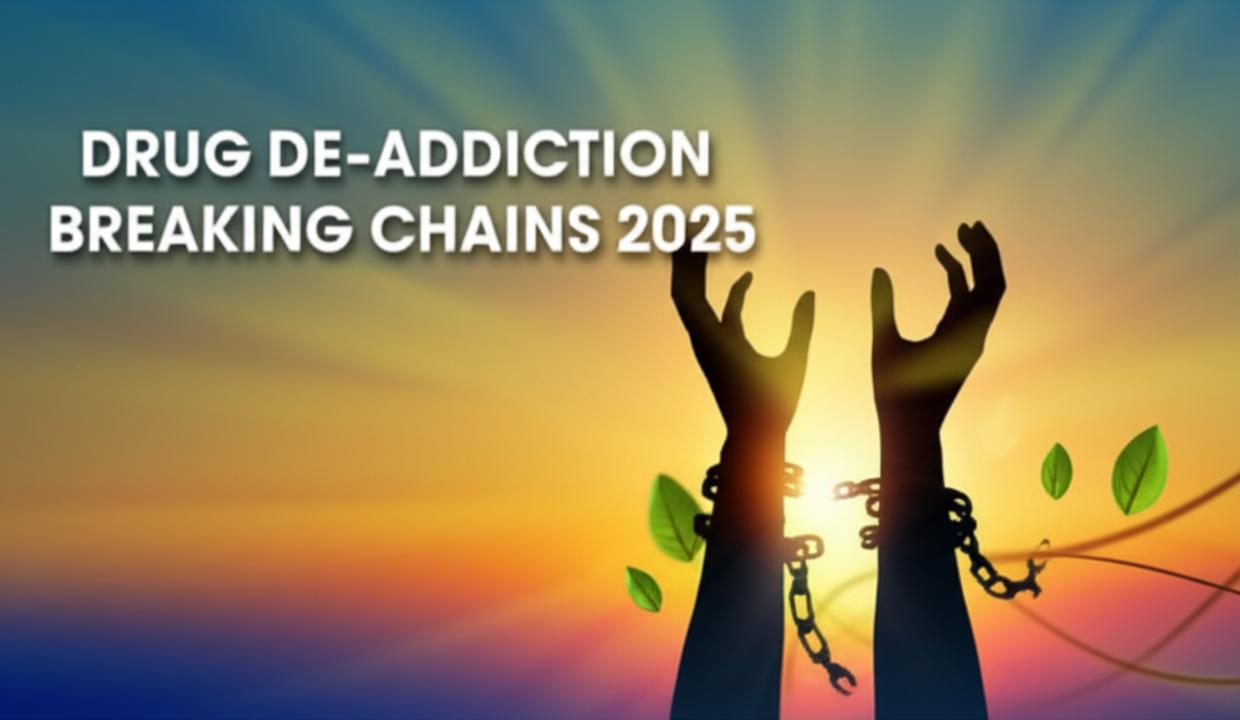
The 2025 theme, “Breaking the Chains,” directly refers to breaking the chains of stigma and societal judgment. It promotes a path to freedom through compassionate care and understanding.
Collaborative Efforts and Implementing Bodies
The success of the Drug De-addiction Campaign Scheme 2025 hinges on strong collaboration across various sectors and organizations. It is truly a multi-stakeholder effort.
In India, the Ministry of Social Justice and Empowerment is the nodal agency. It works closely with other government departments, including health ministries, to integrate addiction services into primary healthcare.
The Narcotics Control Bureau (NCB) plays a crucial role in supply reduction efforts, working hand-in-hand with demand reduction strategies. This dual approach ensures comprehensive action.
Voluntary organizations are vital partners, often operating at the grassroots level to provide direct services, outreach, and community engagement. Their local presence is invaluable.
Globally, the United Nations Office on Drugs and Crime (UNODC) is a key player, coordinating international efforts and promoting best practices. Their expertise informs many national policies.
This collaborative model ensures that all facets of the drug problem are addressed, from prevention and treatment to law enforcement and social reintegration. It creates a robust safety net.
The campaign also emphasizes inter-ministerial coordination, recognizing that drug abuse transcends single departmental boundaries. Health, education, social welfare, and law enforcement must all work together.
Public-private partnerships are also being explored to leverage resources and innovation in the fight against addiction. This broad collaboration strengthens the overall impact of the scheme.
Strengths and Challenges
The Drug De-addiction Campaign Scheme 2025 presents numerous strengths but also faces inherent challenges.
| Pros | Cons |
|---|---|
| Comprehensive Framework: Addresses prevention, treatment, rehabilitation. | Scale of the Problem: Drug abuse is widespread and deeply entrenched. |
| Compassionate Approach: Shifts from criminalization to public health. | Resource Allocation: Requires significant funding and trained personnel. |
| Stigma Reduction: Fosters a supportive environment for recovery. | Societal Resistance: Overcoming ingrained stigma can be slow. |
| Evidence-Based: Focuses on proven methods and integrated care. | Synthetic Drug Evolution: New drugs emerge quickly, posing ongoing challenges. |
| Multi-Sectoral Collaboration: Involves various government bodies and NGOs. | Implementation Gaps: Ensuring uniform reach and quality across regions. |
FAQ
- What is the main goal of the Drug De-addiction Campaign Scheme 2025?
The main goal is to combat substance abuse through a comprehensive approach. It focuses on prevention, treatment, rehabilitation, and social support. The campaign aims to treat addiction as a health issue, reduce stigma, and ensure universal access to care for all individuals.
- How does the 2025 scheme address the issue of stigma?
The scheme places a strong emphasis on stigma reduction by promoting the understanding of addiction as a health condition, not a moral failing. It encourages compassion over criminalization and supports public awareness campaigns to change societal perceptions and facilitate easier access to treatment services.
- What are India’s key contributions to this global campaign?
India leads with initiatives like the National Action Plan for Drug Demand Reduction (NAPDDR) and the Nasha Mukt Bharat Abhiyaan (NMBA). These programs support a vast network of rehabilitation centers, outreach services, and district de-addiction centers, targeting vulnerable districts with integrated strategies for prevention and treatment.
- What is the significance of the “Breaking the Chains” theme?
The “Breaking the Chains” theme for 2025 signifies a crucial shift towards liberation from the cycle of addiction and the chains of societal judgment. It advocates for compassionate, evidence-based treatment and recovery, universal access to care, and a move away from punitive measures towards a public health perspective for drug abuse.
The Road Ahead: Future Prospects
The Drug De-addiction Campaign Scheme 2025 is not just a plan for a single year; it lays the groundwork for sustained efforts in the fight against drug abuse. Its long-term vision is to build resilient, drug-free communities capable of self-reliance.
Future prospects include continued investment in research and development to discover more effective treatment modalities. There will also be a focus on leveraging technology for outreach and support, ensuring wider reach.
The emphasis on addressing root causes like poverty and lack of education suggests a commitment to holistic societal development. This approach fosters an environment where addiction is less likely to take hold.
Continuous monitoring and evaluation will be key to adapting the scheme to emerging challenges, such as the evolution of synthetic drugs. The campaign aims to be agile and responsive.
Ultimately, the scheme envisions a future where individuals with substance use disorders are seen as integral members of society. They will receive the support they need to lead fulfilling, productive lives.
Watch More in This Video
For a deeper dive into the policy directions and expert insights behind the campaign, watch this video:
Note: The video placeholder above is for illustrative purposes. Please replace YOUR_YOUTUBE_VIDEO_ID_HERE with the actual ID from the “International Day Against Drug Abuse & Illicit Trafficking 2025 – Breaking the Chains Campaign Launch” video (uploaded May 2025) if it becomes publicly available. This video highlights new policy directions emphasizing community support, rehabilitation, and integrated healthcare models for addiction treatment. It features expert talks on combining mental health treatment with effective law enforcement to counter rising synthetic drug challenges.
Conclusion
The Drug De-addiction Campaign Scheme 2025 represents a monumental step forward in tackling the global challenge of substance abuse. By embracing a comprehensive, compassionate, and evidence-based approach, it offers a blueprint for creating healthier, more supportive communities.
Its focus on prevention, treatment, rehabilitation, stigma reduction, and strong collaborative efforts ensures a holistic response. From global themes like “Breaking the Chains” to India’s dedicated Nasha Mukt Bharat Abhiyaan, the scheme underscores a universal commitment to human well-being.
As we move forward, the success of this deaddiction plan 2025 will depend on sustained commitment from governments, organizations, and individuals alike. Together, we can break the cycle of addiction and build a future where recovery is truly possible for all.
We encourage you to share this article and raise awareness about this crucial initiative. To learn more about our mission, please visit our About Us page. For any questions, feel free to Contact us. #DrugFreeFuture
Disclaimer: All images and videos are sourced from public platforms like Google and YouTube. If any content belongs to you and you want credit or removal, please inform us via our contact page.