
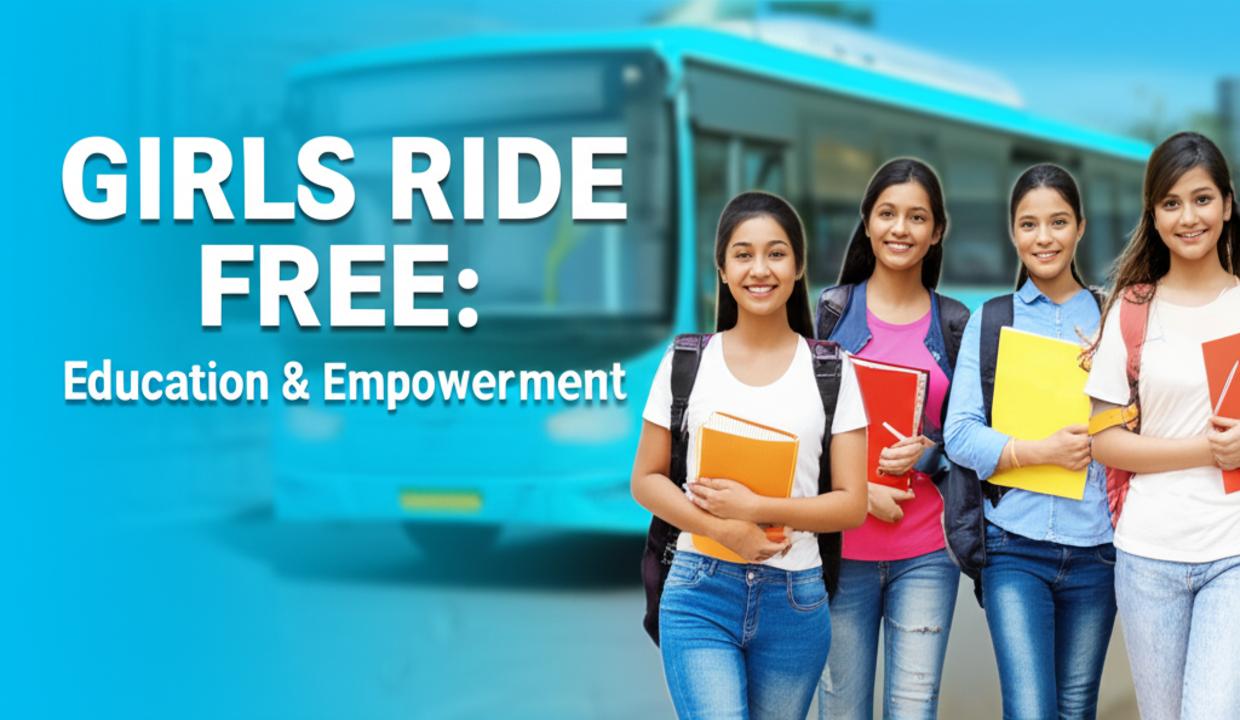
The concept of free bus travel for specific demographic groups has gained significant traction globally, and in India, it has become a cornerstone of social empowerment. Specifically, the Free Bus Travel Scheme for Female Students represents a transformative initiative. This scheme is part of broader government efforts aimed at significantly enhancing women’s mobility, improving their access to education, fostering economic opportunities, and boosting social participation. By offering fare-free or heavily subsidized public bus travel, these programs address a critical barrier for countless young women across the nation.
For many female students, daily commutes to schools and colleges can impose a substantial financial burden. This can often limit their educational choices or even prevent them from pursuing higher studies altogether. This comprehensive article delves into the intricacies of these impactful schemes, exploring their working principles, key examples, recent breakthroughs, and the profound real-world benefits they deliver. We will also examine the challenges and limitations, providing a holistic view of this vital support system for empowering young women through improved transport accessibility.
Main Highlights: Free Bus Travel Scheme for Female Students
At its core, the free bus travel scheme for female students is a strategic government intervention. It aims to reduce the financial strain of transportation on families, especially those from economically challenged backgrounds. This initiative directly supports educational continuity and promotes gender equality.
The scheme operates by allowing eligible female passengers, including students, to travel without charge or at highly discounted rates on designated public buses. This simple yet effective measure has far-reaching consequences, extending beyond mere cost savings. It fosters independence, broadens horizons, and helps bridge the educational gap that transport costs often create.
Understanding the Working Principle of Student Free Bus Pass Schemes
The operational mechanism behind these schemes is straightforward yet impactful. Government-operated bus services provide fare-free or significantly subsidized travel for female passengers, encompassing students. This direct reduction in transportation costs is designed to alleviate financial pressures on households.
For students, this means the daily commute to educational institutions becomes less of a hurdle, both economically and logistically. The availability of a student free bus pass or a general free travel facility encourages higher attendance rates and enables students to consider educational opportunities further from their homes, previously inaccessible due to travel expenses.
These schemes are typically funded through state budgets, reflecting a commitment to social welfare and gender empowerment. While the specifics may vary, the fundamental goal remains consistent: to make education and other vital opportunities more accessible to women. By removing the economic barrier of transport, these initiatives empower women to pursue their academic and professional aspirations more freely.
Pioneering Initiatives: Key Examples of Government Bus Scheme for Students
India has witnessed several states successfully implement and expand the women students bus scheme, demonstrating their commitment to gender equity and educational access. These pioneering efforts serve as models for others.
Delhi’s Universal Free Bus Travel Scheme
Launched in October 2019, Delhi’s Universal Free Bus Travel Scheme is a standout example. It allows all women, regardless of their income or residence, to travel free on Delhi Transport Corporation (DTC) and Delhi Integrated Multi-Modal Transit System (DIMTS) buses. This scheme has dramatically increased bus usage among women.
Remarkably, studies indicate that 23% of women began using buses regularly only after the scheme’s introduction. Around 75% of beneficiaries reported a significant reduction in their monthly transport expenses. These savings were then redirected towards essential household needs, healthcare, and education, illustrating the scheme’s profound socio-economic impact.
Karnataka’s Shakti Program
Another monumental step came with Karnataka’s Shakti Program, offering free bus passes to all female and transgender residents. This ambitious initiative aims to significantly boost access to education and workforce participation across the state. It operates on buses run by state road transport corporations, ensuring wide coverage.
The program highlights a progressive approach to inclusive public transport. It acknowledges the diverse needs of different communities, ensuring that the benefits of accessible travel extend to all who identify as women or transgender. This inclusive design sets a strong precedent for future schemes.
Transformative Schemes in Tamil Nadu and Punjab
Following Delhi’s lead, states like Tamil Nadu and Punjab also introduced similar free bus travel schemes starting in 2021. The impact was immediate and substantial. For instance, in Tamil Nadu, the proportion of female bus commuters soared from 40% to an impressive 61% within just one year.
This surge in ridership necessitated increased government budget allocations to sustain and expand these popular programs. These states’ experiences underscore the high demand and positive reception for such initiatives, demonstrating their vital role in daily life for countless women. For specific details on Tamil Nadu’s scheme, you can check government initiatives for female students.
Expanding Across India
The success stories in Delhi, Karnataka, Tamil Nadu, and Punjab have inspired others. States like Telangana, Jammu & Kashmir, and Andhra Pradesh have either implemented or are actively planning similar schemes. This expansion signifies a growing recognition across India of the pivotal role that accessible public transport plays in women’s empowerment. It’s a national movement towards fostering equitable mobility.
Recent Breakthroughs and Enhanced Mobility for Women Students
The impact of these schemes continues to grow, with significant milestones being achieved. In Delhi, by 2024, over 100 crore “pink tickets” – the distinctive free ride passes – had been distributed to women. This staggering number reflects the immense utilization and demand for the scheme.
Furthermore, various studies have consistently confirmed that the free travel scheme has dramatically improved women’s independent mobility. It has notably reduced the necessity for them to walk long distances, especially in areas with limited public transport options. This enhances their safety and saves valuable time.
Research also highlights a crucial breakthrough for education: more women students are now attending colleges located farther from their homes. This newfound freedom of choice is directly enabled by easier and free transport. It means students are no longer restricted to nearby institutions due to prohibitive travel costs, broadening their academic horizons. This transformative impact has been covered in depth, showing how free bus rides are changing the lives of women.
Real-World Benefits for Students: Empowering Through Access
The immediate and tangible benefits of the free bus travel scheme for female students are numerous, addressing critical needs and fostering greater opportunities. These schemes primarily alleviate significant economic burdens on female students and their families.
For many, the recurring cost of daily travel to educational institutions can be steep, often forming a substantial portion of a household’s monthly budget. By removing this expense, the schemes free up funds that can be reallocated to other essential needs, such as textbooks, study materials, or even supplementary income for the family.
Beyond economics, improved mobility encourages higher attendance rates in schools and colleges. When travel is convenient and free, students are less likely to miss classes due to transport issues or financial constraints. This consistency in attendance directly contributes to better academic performance and educational outcomes.
Moreover, enhanced mobility widens the choices of colleges and universities available to students. They are no longer limited to institutions within a restrictive radius of their homes. This broader selection allows them to pursue courses and programs that genuinely align with their interests and career aspirations, leading to more fulfilling educational paths.
The schemes also facilitate participation in part-time jobs or internships, which are crucial for gaining practical experience and supplementing income. Easy access to different areas of a city means students can explore more opportunities, bridging the gap between academic learning and real-world application. Additionally, increased bus ridership contributes to environmental benefits by reducing reliance on private vehicles, leading to less traffic congestion and lower carbon emissions.
Broader Societal Impact and Gender Equity
The ripple effects of the government bus scheme for students extend far beyond individual beneficiaries, contributing to broader societal advancements. These initiatives have led to a significant increase in overall bus usage among women, thereby boosting their mobility and independence. This freedom of movement is a fundamental step towards true empowerment.
The decreased transport expenses directly translate into greater financial flexibility for families. The savings accumulated can be channeled into other essential needs, improving household welfare and stability. This economic relief has a direct positive correlation with reduced poverty rates in beneficiary households.
Crucially, these schemes enhance access to a wider array of opportunities. This includes not just education but also employment centers, healthcare facilities, and social activities. By removing the transport barrier, women can participate more fully in public life, seeking better job prospects, accessing vital medical services, and engaging in community events.
Ultimately, these initiatives promote gender equity and economic empowerment. They challenge traditional norms that might restrict women’s movement or educational pursuits due to safety or cost concerns. By making public transport universally accessible for women, the schemes actively contribute to building a more inclusive and just society. They are a powerful tool for fostering a ticket to freedom and enabling women to pursue their dreams. Such schemes are vital for promoting gender-just and sustainable urban transport models.
Current Limitations and Future Challenges
Despite their undeniable success and transformative potential, free bus travel schemes face certain limitations and challenges that need to be addressed for effective scaling and sustained impact. One primary concern is ensuring adequate bus capacity and frequency to meet the increased demand generated by these schemes.
As more women utilize public transport, maintaining comfortable and efficient services becomes crucial. Overcrowding can negate some of the benefits, making commutes less pleasant and potentially affecting safety. Safety concerns for female passengers, particularly during off-peak hours or in less populated routes, also remain a critical aspect to address. Enhanced surveillance, better lighting at bus stops, and quick response mechanisms are vital.
The scope and coverage of these schemes vary significantly by state. While some states offer universal access, others might have specific eligibility criteria or limited routes. This inconsistency can lead to disparities in benefits and accessibility across different regions. There remains a pressing need for improved coordination among various government bodies and transport departments to streamline implementation and ensure uniformity where possible.
Furthermore, consistent quality of service and widespread awareness campaigns are essential to maximize the benefits. Ensuring that all eligible women, especially those in rural or remote areas, are aware of their entitlements and how to access them is paramount. Continuous feedback mechanisms and adaptable policy frameworks are necessary to overcome these challenges and ensure the schemes remain robust and responsive to the evolving needs of female commuters. More details on women’s mobility can be found in related discussions.
Watch More in This Video
To gain a deeper understanding of the real-world impact of Delhi’s free bus travel scheme on women students, watch this insightful video from a reputable news outlet. It highlights how enhanced mobility has significantly increased access to education and contributed to the empowerment of young women.
(Please replace `your_video_id_here` with the actual YouTube video ID. The input only mentions “A recent YouTube video (2025)”, not a specific URL or ID.)
FAQ
- How does the free bus travel scheme benefit female students directly?
The scheme directly reduces the financial burden of daily commutes to educational institutions. This saves money for students and their families, allowing them to invest in other essential needs like books or healthcare. It also makes higher education more accessible, broadening college choices.
- Which Indian states have successfully implemented these schemes?
Several states have pioneered these initiatives. Notable examples include Delhi, which introduced universal free travel for women in 2019, Karnataka with its Shakti Program, and Tamil Nadu and Punjab, which launched similar schemes in 2021. Other states like Telangana and Andhra Pradesh are also adopting this model.
- Has the scheme increased college attendance among female students?
Yes, research and real-world observations indicate a positive correlation. The removal of transport costs and improved convenience has encouraged higher attendance rates. It has also enabled more women students to enroll in colleges farther from home, previously deemed inaccessible due to travel expenses.
- What are the main challenges faced by these free bus travel schemes?
Key challenges include ensuring sufficient bus capacity and frequency to handle increased ridership, addressing safety concerns for female passengers, and standardizing the scope and coverage across different states. There’s also a need for continuous awareness campaigns and effective coordination to maximize benefits.
- Is the government bus scheme for students only for female students?
While the specific schemes highlighted here, such as Delhi’s and Karnataka’s, are primarily focused on empowering women (including students), some states may have broader student-specific concessions. However, the current discussion focuses on the widespread “free bus travel for female students” initiatives, which are a significant part of the larger women students bus scheme push.
Conclusion
The Free Bus Travel Scheme for Female Students stands as a testament to transformative policy-making in India. By removing the significant economic and social barrier of transportation costs, these initiatives are proving to be powerful tools for boosting educational access, promoting gender equity, and fostering economic empowerment among young women. From Delhi’s widespread “pink ticket” distribution to Karnataka’s inclusive Shakti Program, the impact is tangible and far-reaching. These schemes are not just about free rides; they are about providing a ticket to freedom, choice, and a brighter future for millions of female students across the nation. The ongoing commitment to scaling and refining these programs will undoubtedly pave the way for a more equitable and educated society. The #WomensMobility revolution is well underway.
We hope this detailed exploration has provided you with valuable insights into this vital government initiative. Feel free to share your thoughts and experiences in the comments section below, or read other articles on our website to explore more on social impact initiatives. You can also learn more About Us and Contact us for any queries.
Disclaimer: All images and videos are sourced from public platforms like Google and YouTube. If any content belongs to you and you want credit or removal, please inform us via our contact page.