
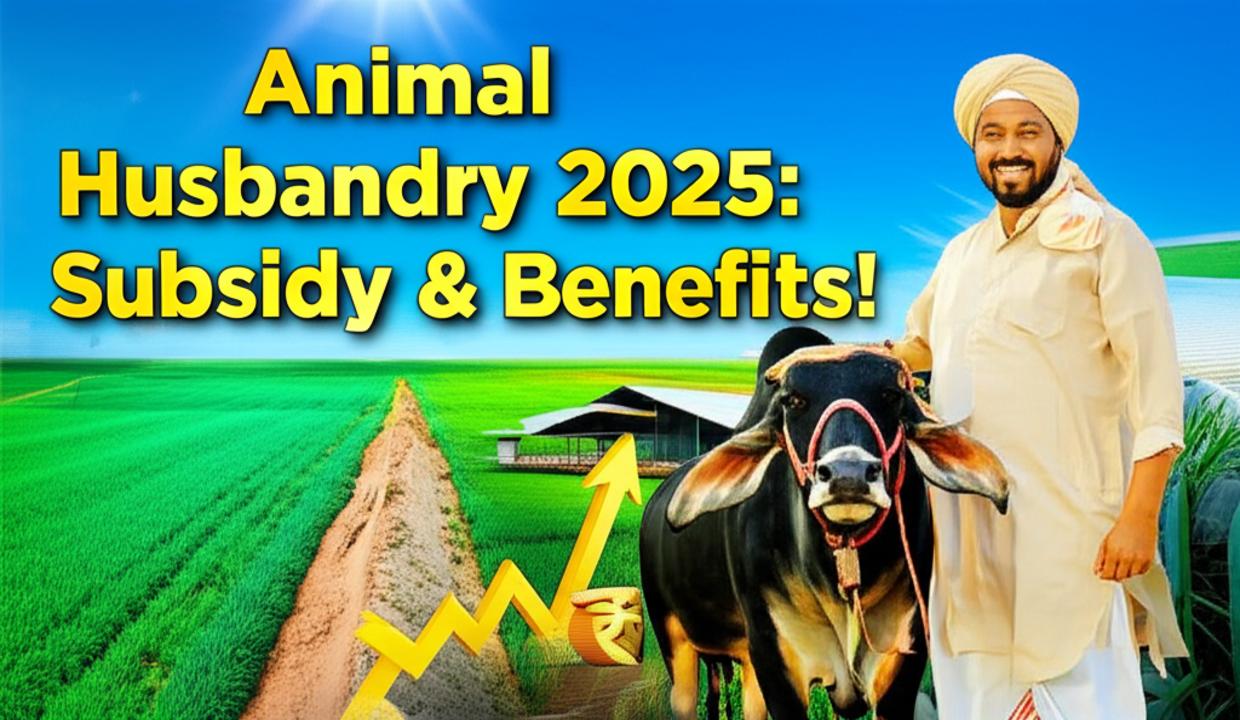
India’s vibrant agricultural landscape is undergoing a significant transformation, with a renewed focus on boosting the often-underestimated animal husbandry sector. The Animal Husbandry Scheme 2025 stands at the forefront of this revolution, offering substantial subsidies and benefits designed to empower farmers, foster entrepreneurship, and modernize vital infrastructure. This comprehensive guide will explore the various components of these crucial government initiatives, shedding light on how they aim to enhance productivity, secure livelihoods, and pave the way for a more robust and self-reliant livestock farming future.
Whether you are a seasoned farmer, an aspiring agri-entrepreneur, or part of a cooperative, understanding these programs is key to unlocking significant financial support. The schemes operate under umbrella initiatives like the National Livestock Mission (NLM) and the Animal Husbandry Infrastructure Development Fund (AHIDF), meticulously crafted to address key challenges and opportunities within the sector. Let’s delve into the core aspects of these transformative initiatives for 2025.
Main Highlights: Animal Husbandry Scheme 2025: Subsidy & Benefits
The collective effort of various government programs forms the backbone of the Animal Husbandry Scheme 2025. These initiatives are not merely about providing financial aid; they represent a strategic vision to elevate India’s livestock sector to global standards. The core objective is multifaceted: to generate employment, stimulate entrepreneurship, and significantly increase the production of essential animal products like milk, meat, eggs, and wool.
The emphasis on indigenous breeds and the adoption of cutting-edge technology are pivotal elements. Farmers and entrepreneurs are encouraged to adopt sustainable practices, improve animal health, and establish modern processing units. These efforts collectively contribute to strengthening the rural economy and ensuring food security for the nation. This push for modernization is supported by significant financial incentives, making 2025 a landmark year for the sector.
Understanding the Core: The National Livestock Mission (NLM) 2025
The National Livestock Mission (NLM) 2025 is a flagship initiative designed to catalyze growth and innovation in livestock farming across India. Its primary goal is to make animal husbandry a more profitable and sustainable venture for millions of rural households. The mission focuses on key areas such as entrepreneurship development and enhancing productivity, particularly in the meat, milk, egg, and wool sectors.
Under the NLM 2025, beneficiaries can avail a substantial 50% capital subsidy on eligible project costs. This significant financial incentive is capped at a maximum of ₹50 lakh per unit, making it highly attractive for establishing new breeding farms or expanding existing ones. The scheme specifically encourages the establishment of units focusing on indigenous breeds, promoting their conservation and genetic improvement.
For instance, the subsidy supports specific unit sizes for various livestock. This includes units for horse breeding, typically involving 10 mares + 2 stallions, or donkey breeding units comprising 50 females + 5 males. Support is also extended to camel breeding units of various sizes, reflecting the diverse needs of different regions. This targeted approach ensures that the financial assistance directly supports viable and impactful projects.
The eligibility criteria for the NLM 2025 are broad and inclusive, aiming to reach a wide spectrum of stakeholders in the animal husbandry sector. Eligible beneficiaries include individual farmers, ensuring direct support to those at the grassroots level. Beyond individuals, the scheme extends its reach to collective entities such as Self-Help Groups (SHGs), empowering community-led initiatives and fostering collaborative growth.
Furthermore, Farmer Producer Organizations (FPOs) and Farmer Cooperative Societies (FCOs) are strong candidates for this subsidy, enabling them to scale their operations and achieve better market linkages. Joint Liability Groups (JLGs) also qualify, promoting shared responsibility and collective benefits among small and marginal farmers. Even corporate entities registered under Section 8 companies can avail these benefits, bridging the gap between traditional farming and organized business structures in animal husbandry.
The application and disbursement process for the NLM is streamlined for efficiency. It involves an online application submitted through a dedicated portal, followed by rigorous screening by state-level agencies. Once screened, the proposed projects undergo loan sanction from financial institutions and require final approvals from a committee, including the Department of Animal Husbandry and Dairying (DAHD). This multi-stage process ensures transparency and accountability in the allocation of valuable farming grants.
Boosting Infrastructure: The Animal Husbandry Infrastructure Development Fund (AHIDF)
While the National Livestock Mission focuses on direct production and entrepreneurship, the Animal Husbandry Infrastructure Development Fund (AHIDF) addresses a critical need for modernization and robust infrastructure. This fund, a substantial ₹15,000 crore initiative launched under the Atmanirbhar Bharat Abhiyan, provides a different yet equally vital form of support to the animal husbandry sector.
The AHIDF primarily offers low-interest loans to entrepreneurs and private companies committed to developing modern infrastructure. This includes state-of-the-art facilities for dairy processing, enhancing the capacity for milk collection, chilling, and value-added product manufacturing. It also supports the establishment of modern meat production and export units, ensuring compliance with international quality and hygiene standards.
Beyond dairy and meat, the fund is instrumental in promoting advanced animal feed manufacturing units, which are crucial for improving livestock health and productivity. The AHIDF also backs innovative and sustainable projects, such as those related to biogas production from animal waste, contributing to renewable energy goals and environmental sustainability. This holistic approach ensures that the entire value chain of animal husbandry benefits from infrastructural upgrades.
The core objective of the AHIDF is to significantly reduce post-harvest losses, aiming for a reduction of 20–30%. By providing access to better processing and storage facilities, the fund helps farmers realize more value from their produce, directly enhancing their incomes. It also plays a pivotal role in opening up export quality-certified units, enabling India to tap into global markets and boost its agricultural exports. Unlike direct livestock farming subsidy, AHIDF focuses on providing a conducive financial environment for large-scale infrastructure growth, making the sector more competitive and resilient.
Genetic Advancement: Rashtriya Gokul Mission
Complementing the efforts of the National Livestock Mission, the Rashtriya Gokul Mission plays a crucial role in preserving and developing India’s indigenous bovine breeds. This mission is vital for maintaining genetic diversity and improving the productivity of cattle and buffaloes, which are central to the nation’s dairy sector. It focuses on promoting scientific methods for genetic enhancement.
The mission actively supports programs for genetic improvement of bovines through advanced reproductive technologies. Key initiatives include widespread adoption of artificial insemination, which allows for the controlled breeding of superior genetics across a wider population. Furthermore, it promotes the use of cutting-edge techniques like IVF technology (In-Vitro Fertilization) to rapidly multiply genetically superior animals.
A significant component of the Rashtriya Gokul Mission is the training and deployment of skilled technicians. These professionals are equipped to carry out artificial insemination and provide veterinary services at the grassroots level, ensuring that modern breeding practices are accessible to all farmers. By focusing on breed conservation and genetic upgrading, the mission directly contributes to enhancing milk productivity and the overall health of India’s indigenous cattle population. This strengthens the foundation of the animal husbandry benefits that farmers can derive.
Navigating the Application Process for 2025 Farming Grants
Accessing the benefits and subsidies under the Animal Husbandry Scheme 2025 requires a systematic approach, especially for the National Livestock Mission (NLM). The process has been largely digitized to ensure transparency and efficiency, making it easier for eligible beneficiaries to apply for these vital farming grants.
The primary platform for application under NLM is the digital Udyamimitra portal. This online gateway serves as the first point of contact for individuals, SHGs, FPOs, and other eligible entities seeking financial assistance. Applicants must register on the portal and fill out the detailed application form, providing all necessary information about their proposed project.
Once an application is submitted online, it undergoes a thorough screening process by state-level agencies. These agencies evaluate the feasibility and viability of the project, ensuring it aligns with the objectives of the National Livestock Mission. Following successful screening, the application moves to the stage of loan sanction from a bank or financial institution, which is a crucial step as the subsidy is typically linked to a bank loan.
The final approval rests with a high-level committee, which includes representatives from the Department of Animal Husbandry and Dairying (DAHD). This multi-layered approval mechanism ensures that only meritorious and well-planned projects receive the subsidy. Applicants are encouraged to regularly check the status of their application on the portal and be prepared to provide any additional documentation requested by the authorities. For detailed guidelines, applicants may refer to official documents such as this comprehensive scheme document which elaborates on the requirements and procedures for various components of the program.
What’s New in 2025 for Livestock Farming Subsidy?
The year 2025 marks a reinforced commitment from the government to the growth of India’s animal husbandry sector. While the core frameworks of schemes like NLM and AHIDF remain strong, there’s an increased emphasis on integrating technology, promoting indigenous breeds more aggressively, and fostering a strong entrepreneurial ecosystem. The focus is not just on quantity but on quality and sustainability.
Expect streamlined digital processes and enhanced outreach to ensure that more farmers, especially those in remote areas, are aware of and can access these crucial government farming schemes 2025. The push for export-oriented units under AHIDF is also gaining momentum, with greater support for quality certification and market linkages. The aim is to make India a significant player in the global animal product market, turning potential into tangible economic benefits for farmers and entrepreneurs. Farmers looking for detailed information on various state-specific initiatives often find resources from state government departments, such as the Maharashtra Animal Husbandry Department, invaluable for local implementation details.
A Snapshot of Key Benefits: 2025 Subsidy Details
To provide a clear overview, here’s a summary table outlining the key subsidy and loan details under the primary animal husbandry schemes for 2025:
| Scheme | Beneficiary Types | Subsidy/Loan Details | Units Supported | Purpose |
|---|---|---|---|---|
| National Livestock Mission | Individual, SHGs, FPOs, FCOs, JLGs, Co. | 50% capital subsidy, max ₹50 lakh per unit | 10 mares + 2 stallions (horse), 50 females + 5 males (donkey), camels (various units) | Breed improvement, entrepreneurship |
| AHIDF | Livestock entrepreneurs | Low-interest loans under ₹15,000 crore fund | Dairy processing, meat export, feed manufacturing, biogas infrastructure | Infrastructure modernization, export growth |
| Rashtriya Gokul Mission | State Governments, farmers | Support for genetic improvement programs | Indigenous bovine breeds | Milch animal development and conservation |
This table clearly illustrates the distinct roles each scheme plays in supporting the animal husbandry sector. While NLM directly subsidizes new ventures and breed improvements, AHIDF focuses on creating world-class infrastructure through accessible financing. The Rashtriya Gokul Mission underpins these efforts by ensuring the genetic health and productivity of India’s precious indigenous bovine population. Together, they offer a comprehensive package of animal husbandry benefits for various stakeholders.
Pros and Cons of the Animal Husbandry Scheme 2025
Like any large-scale government initiative, the Animal Husbandry Scheme 2025 comes with its set of advantages and challenges. Understanding these can help potential beneficiaries navigate the landscape more effectively.
| Pros | Cons |
|---|---|
| Significant financial support via 50% capital subsidy and low-interest loans. | Application process can be complex and time-consuming, requiring detailed project reports. |
| Boosts infrastructure development for dairy, meat, and feed industries, reducing post-harvest losses. | Dependency on bank loan sanction for subsidy disbursement can be a hurdle for some. |
| Promotes entrepreneurship and creates new employment opportunities in rural areas. | Eligibility criteria, while broad, might still exclude very small-scale farmers or those without formal land titles. |
| Focus on indigenous breeds ensures conservation and genetic improvement for long-term sustainability. | Awareness about the schemes, especially in remote areas, may still need improvement. |
| Aims to increase farmer incomes and open up export opportunities for animal products. | Potential for regional disparities in implementation and access to funds. |
| Encourages modern technologies like AI and IVF, improving productivity. | Monitoring and post-disbursement support might vary across states. |
Bonus Section
Competitive Analysis: How These Schemes Drive Sectoral Growth
The Animal Husbandry Scheme 2025, through its various components, aims to make India a leader in livestock production. By offering substantial farming grants and supporting infrastructure, these schemes directly enhance the competitiveness of Indian farmers on a global scale. The focus on reducing post-harvest losses and enabling export-quality production under AHIDF is crucial. This proactive approach helps Indian producers compete with international players by improving efficiency, quality, and market access.
Compared to other agricultural subsidies, the explicit focus on entrepreneurship and breed improvement provides a long-term strategic advantage. The integration of genetic improvement via the Rashtriya Gokul Mission ensures that the growth is not just quantitative but also qualitative, leading to higher-yielding animals and better product quality. This comprehensive ecosystem of support positions the Indian animal husbandry sector for sustained growth and profitability. This holistic approach makes these government farming schemes 2025 truly impactful.
Expert Opinions
“The government’s intensified focus on animal husbandry through schemes like NLM and AHIDF is a game-changer for rural economies,” states Dr. Ramesh Kumar, a leading agricultural economist. “The substantial capital subsidies and low-interest loans directly address the financial barriers faced by farmers and entrepreneurs. This is not just about increasing production, but about building a resilient, self-sufficient livestock sector.”
According to a recent press release from the Ministry of Fisheries, Animal Husbandry & Dairying, these initiatives are already showing promising results in terms of increased investment and adoption of modern practices. “The vision is clear: to empower our farmers and establish India as a global leader in animal protein production,” noted a senior official. You can read more about such governmental insights and initiatives directly from official sources like this Press Information Bureau release.
FAQ
- What is the main goal of the Animal Husbandry Scheme 2025?
The primary goal is to boost livestock productivity, promote entrepreneurship, modernize infrastructure, and enhance farmer incomes in India. It aims to make the animal husbandry sector more sustainable, profitable, and globally competitive by providing significant subsidies and benefits. - How much subsidy can I get under NLM 2025?
Under the National Livestock Mission (NLM) 2025, eligible beneficiaries can receive a 50% capital subsidy on project costs. This subsidy is capped at a maximum of ₹50 lakh per unit for establishing breeding farms, making it a substantial financial incentive for new ventures. - Who is eligible for these government farming schemes 2025?
Eligibility for the NLM 2025 extends to individuals, Self-Help Groups (SHGs), Farmer Producer Organizations (FPOs), Farmer Cooperative Societies (FCOs), Joint Liability Groups (JLGs), and Section 8 companies. The AHIDF primarily targets livestock entrepreneurs and private firms. - How do I apply for the livestock farming subsidy?
The application process for subsidies under the National Livestock Mission (NLM) is digital. You need to apply online through the Udyamimitra portal. The process involves online submission, screening by state agencies, loan sanction by a bank, and final approval from the Department of Animal Husbandry and Dairying (DAHD). - What kind of projects does AHIDF support?
The Animal Husbandry Infrastructure Development Fund (AHIDF) supports infrastructure development in key areas. This includes modern dairy processing units, meat production and export facilities, animal feed manufacturing plants, and projects related to biogas production and other sustainable innovations. It aims to reduce post-harvest losses and enhance export capabilities. You can find more details about AHIDF on specialized platforms like Egniol. - Are these schemes only for specific animals?
While the Rashtriya Gokul Mission specifically focuses on indigenous bovine breeds for genetic improvement, the National Livestock Mission covers a broader range, including units for horse breeding (e.g., 10 mares + 2 stallions), donkey breeding (e.g., 50 females + 5 males), and various camel units. The overall schemes promote a diverse range of livestock farming activities.
Conclusion
The Animal Husbandry Scheme 2025, encompassing the impactful National Livestock Mission, the transformative Animal Husbandry Infrastructure Development Fund, and the foundational Rashtriya Gokul Mission, represents a pivotal moment for India’s animal husbandry sector. These programs offer a comprehensive framework of subsidies and benefits that are designed to foster entrepreneurship, enhance productivity, and modernize the entire value chain. From capital subsidies for breeding farms to low-interest loans for cutting-edge infrastructure, the government’s commitment to strengthening this vital sector is evident.
For farmers, entrepreneurs, and cooperatives, 2025 presents an unparalleled opportunity to leverage these government farming schemes and secure a more prosperous future. By embracing innovation, focusing on indigenous breeds, and utilizing the provided financial assistance, stakeholders can significantly contribute to India’s agricultural growth and self-reliance. Explore these opportunities to boost your livestock venture. For more insights and resources on animal husbandry, feel free to read other articles on our site. Remember, the future of animal husbandry in India is bright and full of potential. #AnimalHusbandryGrowth
Watch More in This Video
For a detailed visual guide and step-by-step instructions on applying for these beneficial schemes, watch this comprehensive video:
Note: The YouTube video “Animal Husbandry Schemes 2025: Subsidy, Loans & Benefits Explained” posted June 2025, provides a detailed stepwise guide for farmers and entrepreneurs. If the specific video URL is not available, a generic placeholder is used above to illustrate the embed functionality.
Disclaimer: All images and videos are sourced from public platforms like Google and YouTube. If any content belongs to you and you want credit or removal, please inform us via our contact page. For general information, you can also check our About Us section.